
What is Tantra? The Science of Awakening
Tantra is said to be more than 10,000 years old. The yoga we know today evolved from the great Tantric civilisation that flourished in India and across various parts of the ancient world millennia ago. Archaeological discoveries in the Indus Valley, at sites such as Harappa and Mohenjodaro have revealed statues and carvings depicting deities in meditative postures and yogic asanas, testifying to the deep spiritual roots of this civilisation.
The techniques and principles of yoga as we know them today originate from Tantra the two are inseparable. When we break down the word Tantra, we find profound meaning: Tan means “to expand” or “to weave,” and Tra, as in Mantra, means “to protect” or “to sustain.” Thus, Tantra can be understood as the sacred process of expansion through the weaving together of all aspects of life in a way that is both sustainable and sanctified.
Tantra teaches that every element of life, physical, emotional, and spiritual is part of one unified whole. Through the weaving together of practices such as āsana, prāṇāyāma, mantra, meditation, yajña, bhakti, and rāja yoga, Tantra integrates every dimension of human experience. The wall between the sacred and the mundane dissolves. Every aspect of our existence relationships, work, and spiritual practice becomes an expression of the same divine pulse.
In ancient times, the techniques of yoga were kept secret, transmitted only from teacher to disciple through oral tradition. This ensured that their depth and sanctity were preserved and understood only by those who were prepared and worthy to receive them. This remains true today one may read an entire library of yoga texts and still remain in darkness without the light of direct transmission. The techniques of the ancients, used for liberation thousands of years before the time of Christ, are still passed on today through living lineages. The great scriptures such as the Bhagavad Gītā and the Yoga Sūtra are written in the symbolic language of Sanskrit, their esoteric meanings veiled, revealed only to those ready to receive them.
Tantra can be seen as humanity’s original science the science of awakening. It is the cultivation of both power (prāṇa) and auspiciousness (śrī). Closely connected with Haṭha Yoga, Tantra explores the harnessing and direction of life force energy. It is associated with the symbols of the Sun and, in its more advanced stages, Fire representing transformation, illumination, and the burning away of limitation.
At its essence, Tantra is about empowerment practices that expand our luminosity and awaken us to our innate divinity. It teaches that power, or prāṇa, is essential not only for spiritual realization but also for genuine happiness and success in the material world. The work of Tantra is to burn through the veils that obscure our perception so we may experience the all-pervading presence of the Divine. It is, in its truest form, the science of energy management for to understand one’s own energy is to understand the energy of the entire universe, and through that understanding, to realize one’s oneness with it.
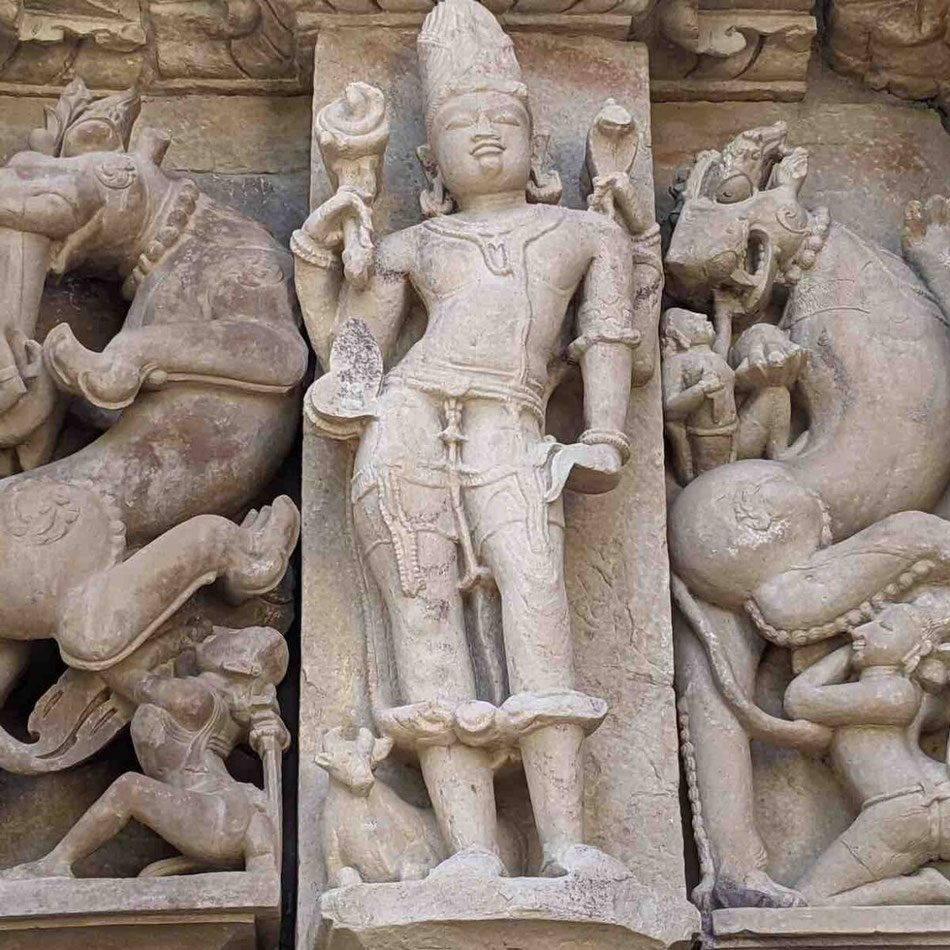
Tantra is the science of expanding consciousness and liberating energy. It is the path toward freedom from the bondages of the world, while still living fully within it. The first step in Tantra is to understand the capacities and limitations of both body and mind. From this foundation, Tantra offers precise methods for the expansion of awareness and the awakening of life force (prana), through which personal boundaries dissolve and higher states of reality are experienced.
Tantra systematically clears energetic blockages within the body, builds new energy, and then channels it skillfully through both the gross and subtle systems, ultimately directing it into the central axis of the spine. Its practices train us to master life force, not only in meditation but in all dimensions of daily life. Tantra is a vast, living tradition - a reservoir of techniques designed to accelerate both spiritual evolution and worldly success.
In modern times, Tantra has often been misunderstood and misrepresented. When asked what they practice, many yogis will say “Yoga,” yet in truth, most are practicing Tantra. Tantra is the only tradition that unites such a wide spectrum of disciplines under one holistic system - Bhakti (devotion), Yantra (sacred geometry), Asana (posture), Pranayama (breath), and more. While Yoga primarily concerns the path of meditation, the awakening of clear perception and self-knowledge, Tantra goes beyond, integrating the cultivation of power, the alignment of that power with the soul’s deepest purpose, and the transmutation of limitation into luminosity.
Tantra teaches that life itself is divine. It is not a rejection of the world but a total embrace of it. Where Yoga illuminates the inner landscape of the mind, Tantra empowers us to channel that light into creation, into our relationships, our work, and our spiritual evolution. It unifies spiritual practice with worldly life, enabling us to awaken and thrive in both. Though distinct in its wisdom, Tantra encompasses and includes the principles of both Yoga and Ayurveda.
At its essence, Tantra views the universe as a manifestation of pure consciousness. In the act of creation, consciousness appears to divide itself into two complementary forces that can never exist without each other: Shiva, the still and formless principle, and Shakti, the dynamic, creative power. Though seemingly separate, they remain one, like ink and the written word, two aspects of a single reality. The journey of Tantra is to know these two as one, through the awakening of kundalini, where their union is directly realized.
In the Himalayan tradition, Yoga, Vedanta, and Tantra are companion streams of one river. Tantra, however, offers both the philosophy and the practical tools to embody that wisdom. It invites not only understanding but transformation, to become the philosophy itself.
At its core, Tantra teaches that every living being holds the capacity to be extraordinary, to express the full radiance of the soul. We are born from a divine impulse, a sacred desire to create something magnificent. That desire drew us into form. Tantra is the sacred art of remembering why we came—to awaken, to create, and to live as the embodied expression of consciousness itself.